Minor Surgery
Mole Removal
At The Doctors Practice in Birmingham, we offer same-day and next-day private mole removal with Dr Bik or Dr Rinku. If you’ve been thinking about having a mole removed, whether for cosmetic or medical reasons, you don’t need to wait months for an appointment.
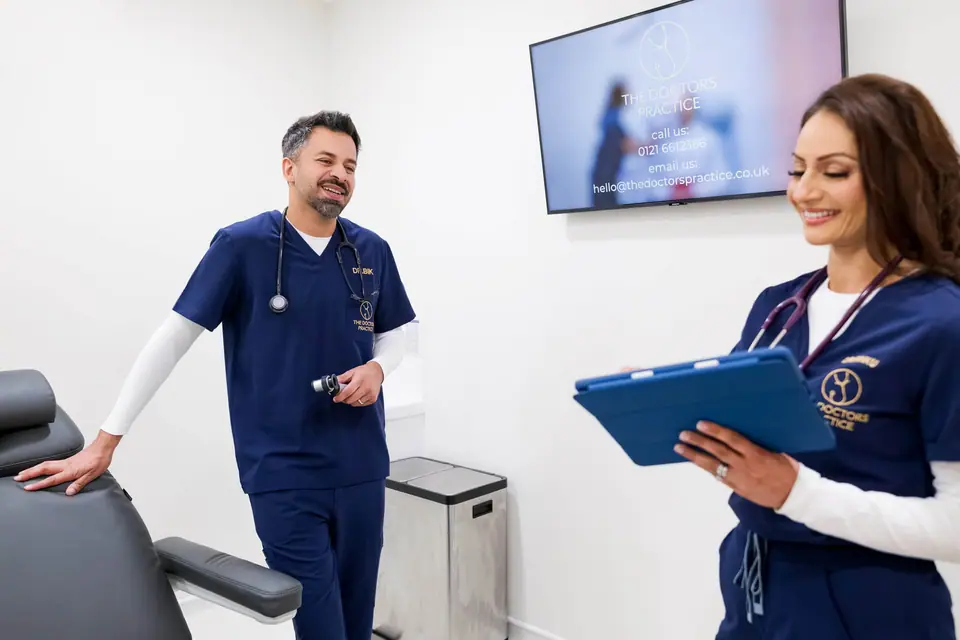
Mole Removal Procedure Birmingham
The vast majority of moles are completely harmless. Most adults develop between 10 and 40 moles over their lifetime, and these remain benign throughout life. However, changes in a mole can sometimes indicate skin cancer, including melanoma. Assessing moles regularly is particularly important given that melanoma incidence in the UK has risen 50% in the last decade, with around 16,700 new cases diagnosed annually.
All mole removal procedures at our clinic are doctor-led, performed in a dedicated treatment room by practitioners with over 20 years of experience in minor surgery. We remove benign moles for both medical and cosmetic reasons, with optional histology available where clinically indicated.
Moles in high-friction areas, such as the collar line, bra strap, waistband, or beard area, are often removed simply for comfort, even when there’s no medical concern. Many patients also choose cosmetic mole removal because a mole affects their self-confidence.
Our Mole Removal Procedure
All mole removal at The Doctors Practice is performed under local anaesthetic as a walk-in, walk-out procedure. Most appointments take around 20–40 minutes from start to finish, including the consultation and the procedure itself. You remain awake and comfortable throughout, and there’s no need for general anaesthesia or an overnight stay.
Dr Bik and Dr Rinku perform every procedure personally. A small injection of lidocaine fully numbs the area within 2–5 minutes. We primarily use shave excision for raised moles that are clearly benign, while surgical excision is preferred for flat moles, irregular lesions, or where histology is needed.
- Full assessment of your mole(s) by Dr Bik or Dr Rinku
- Dermoscopy examination (magnified assessment using polarised light) where indicated
- Photography for baseline records if appropriate
- Clear explanation of risks and benefits, with written consent taken before proceeding
- Hospital-grade treatment room with sterile technique and single-use instruments where appropriate
- Light dressing and written aftercare instructions before you leave
Types of Moles We Commonly See
Each type of mole may need a slightly different removal approach, which is why a proper consultation with an experienced doctor matters. Any mole that appears atypical on examination may be biopsied or fully excised and sent for histological analysis.
- Raised moles: often dome-shaped, frequently catch on clothing, razors, or jewellery, and are usually straightforward to remove using shave excision
- Flat moles: lie flush with the surrounding skin, benefit from assessment including dermoscopy, and often require surgical excision
- Congenital moles (present since birth): sometimes removed if large, prominent, or difficult to monitor, and require careful assessment
- Acquired adult moles: develop throughout life, most commonly on sun-exposed areas such as the face, shoulders, and back
Histology and Safety
Histology is the laboratory examination of removed tissue under a microscope. It’s the only way to confirm definitively whether a mole is benign or shows any early changes that require further treatment. If a mole looks clinically suspicious, we will strongly recommend sending it for histology via an accredited UK laboratory.
Results typically arrive within 1–2 weeks and are explained by the same doctor who performed your procedure. If onward referral to a consultant dermatologist or consultant plastic surgeon is needed, we’ll arrange this promptly. Patient safety is never compromised – if we have any concerns, we will always recommend the safest approach, even if that means referral to NHS services rather than private removal.
Recovery, Scarring and Aftercare
Recovery from mole removal is typically straightforward. Most patients experience only mild discomfort, easily managed with simple painkillers like paracetamol if needed at all. Surface healing generally occurs within 7–14 days, and scar maturation and fading continues over 6–12 months.
The vast majority of patients heal without complications. Infection rates are low (around 1–2% with proper technique), and serious problems are rare when aftercare instructions are followed.
- Keep the area clean and dry for the first 48 hours
- After initial healing, silicone gel or sheets can help flatten and fade scars
- Protect the area from sun exposure with SPF 30+ for at least 6 months
- Avoid picking at scabs or sutures
- Massage the scar gently once healed (usually from week 2–3) to aid remodelling
Questions patients ask
Is mole removal painful?
How many moles can you remove in one visit?
Can I drive home after my procedure?
How long before I can exercise or swim?
What if you find something concerning?
Will there be a scar?
At a glance
- Procedure time 20–30 minutes
- Local anaesthetic
- Usually minimal downtime
- Follow-up 1 week after procedure
- £69 consultation (redeemable if you proceed with surgery)
- Procedures from £399
Not sure this is the right entry?
Our team will help you choose the most appropriate appointment.